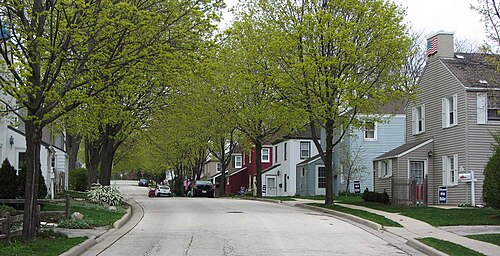
Uncle Sam built a suburb. During the Great Depression, Franklin D. Roosevelt's Resettlement Administration poured millions into a radical social experiment just southwest of Milwaukee, creating Greendale as one of only three federal "Greenbelt" towns in the entire country. Planners wanted to escape city chaos. So, they bought up 3,400 acres of farmland and laid out a pedestrian-focused utopia featuring cul-de-sacs, communal parks, and a protective collar of undeveloped green space to block encroaching development. It was a wild idea. Workers built 572 housing units using cinder blocks, arranging them into superblocks where kids could walk to school without ever crossing a major street.
Tenants faced strict screening. Government officials hand-selected the first working-class families based on income, occupation, and even their willingness to participate in community activities. Rent cost about twenty-eight dollars monthly. For that price, families got modern plumbing, a coal stove, and a backyard garden plot designed to help them grow their own food. They even shared a cooperative grocery store, movie theater, and weekly newspaper. But the architecture itself wasn't flashy. Architects like Harry Bentley chose simple, boxy Colonial Revival and modern forms, which some critics mockingly compared to bunkers, though the structures proved incredibly durable.
Congress eventually sold the town. In 1949, the federal government decided to get out of the landlord business, so they passed legislation allowing residents to buy their homes. Most tenants bought immediately. While many "Greendale Originals" acquired additions over the decades, the core layout remains remarkably intact. This durability explains why the site earned a National Historic Landmark designation. Walk down Broad Street today, and you still see the original brick village hall and the footpaths that bypassed the automobile age entirely.