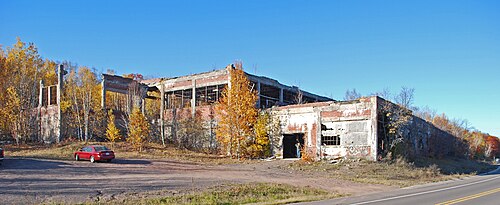
In 1888, the Quincy Mining Company needed to crush a lot of rock. They chose Torch Lake. Here, they built two massive stamp mills to process the copper-bearing amygdaloid ore hauled down from the hills above Hancock. It was deafening. Inside the wooden-framed mills, giant steam-driven stamps pounded day and night. Massive Allis hammers dropped five-ton weights onto the stone, shattering it to release the trapped metal. Water washed the slurry. Gravity did the rest, separating heavy copper from the lighter sand on vibrating tables. The company got rich.
But the waste piled up. The mills simply dumped the leftover stamp sands directly into Torch Lake. Over decades, this created a massive, sterile desert of grey sand jutting into the water. Actually, it filled in over twenty percent of the lake's volume. Ruins still stand. Skeletal steel frames and crumbling red-brick walls sit on the shoreline. They look like industrial ghosts. The site also includes the massive coal docks and the remains of the Quincy and Torch Lake Railroad.
Why does this ruin matter It shows the sheer scale of the Upper Peninsula's copper boom. It wasn't just about digging holes. Mining required massive, integrated industrial networks to make any money. Technology improved over time. So, the company built a reclamation plant on site to dredge up the discarded sand they threw away decades earlier. They re-processed it to squeeze out even more copper. This salvaged eighty million pounds of metal. Today, those quiet ruins tell a story of a time when Michigan's Copper Country ruled the market, long before the boilers went cold.
- T Walker
What Makes Quincy Mining Company Stamp Mills Historic District Special: